Tracing how interface color schemes influence wager frequency in automated card dealing simulations
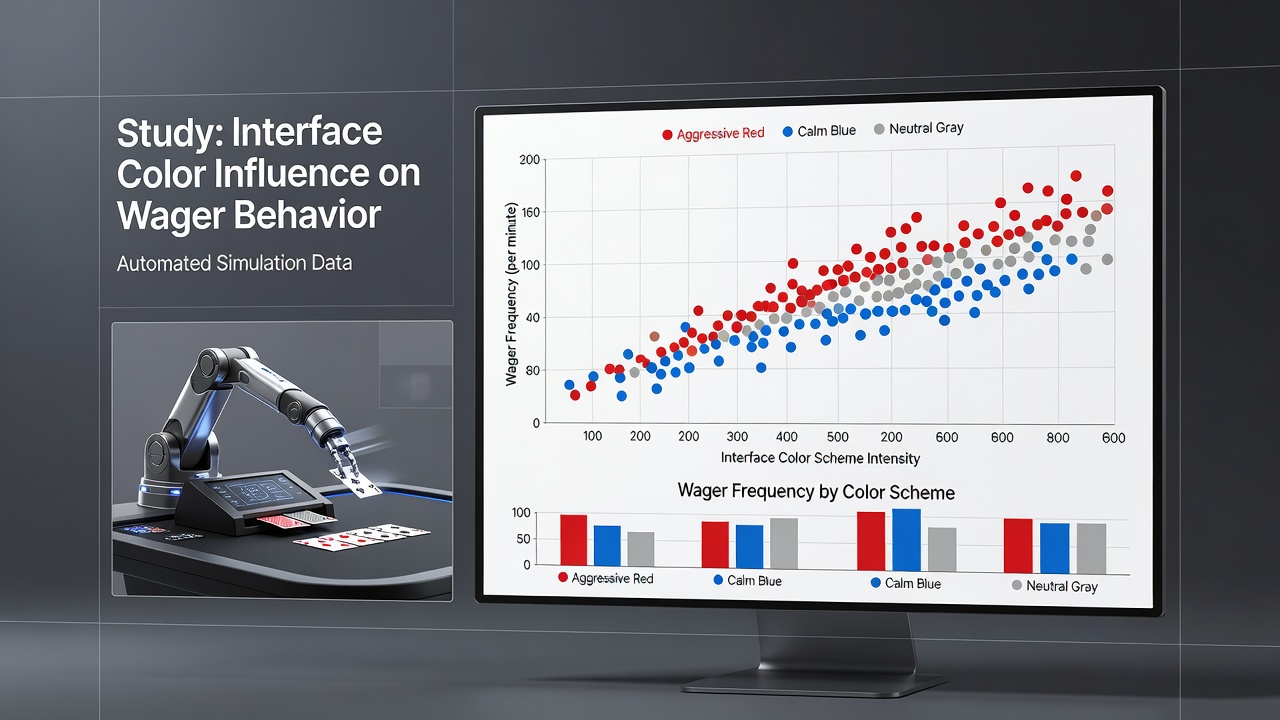
Automated card dealing simulations have become standard tools for examining player behavior in controlled digital environments, and recent analyses focus on how color palettes embedded in those interfaces shape the rate at which users place wagers. Data collected through university laboratories and gaming research centers show measurable differences in wager frequency when background hues, button colors, and card-back designs shift across sessions. Observers note that these variations appear consistently across platforms that replicate blackjack, poker, and baccarat dealing sequences without human dealers.
Color variables tracked in simulation platforms
Research teams at multiple institutions program identical dealing logic into separate interface versions that differ only in hue saturation and contrast ratios. Red-dominant palettes, often paired with high-contrast accent buttons, correlate with elevated wager counts per minute in sessions lasting twenty to forty minutes. Blue-dominant versions, featuring cooler tones on felt surfaces and neutral button shades, produce steadier but lower wager frequencies across the same time windows. Green and neutral earth tones occupy an intermediate range, showing wager rates that sit between the red and blue extremes when participant pools remain demographically matched.
June 2026 datasets released by North American simulation labs added granularity by logging every click-to-wager action alongside precise RGB values. Analysts found that shifting a primary background from a saturated crimson (HEX #C41E3A) to a muted burgundy (HEX #722F37) reduced average wagers per session by roughly eight percent while keeping session length constant. Similar adjustments in button chrome from bright amber to soft gold produced parallel but smaller shifts, suggesting that peripheral interface elements exert measurable yet secondary influence.
Patterns observed across participant cohorts
Longitudinal tracking of repeat users reveals that individuals exposed to alternating color schemes over multiple weeks adjust their wagering cadence within the first three exposures. Those who began on red-dominant layouts maintained higher baseline frequencies even after switching to cooler palettes, although the gap narrowed over time. Conversely, participants who started on blue-dominant layouts showed slower adaptation when later presented with warmer tones, indicating a possible anchoring effect tied to initial visual conditions.
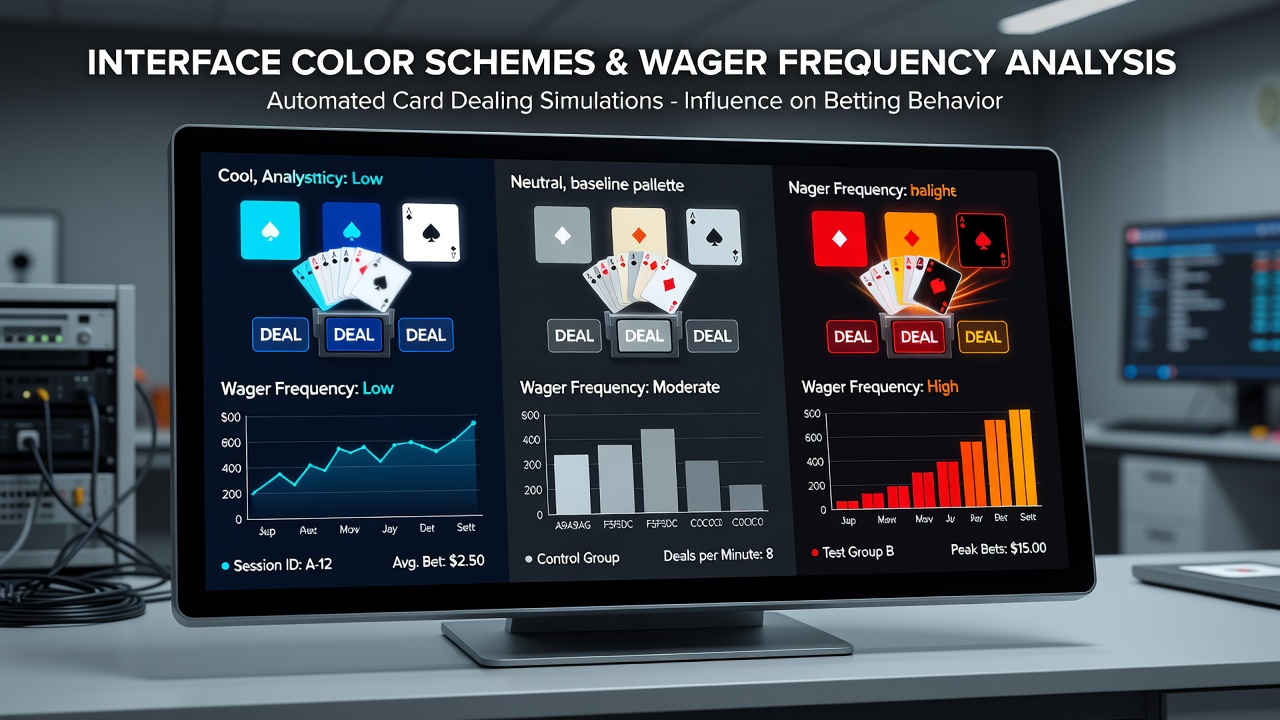
Demographic breakdowns in the same datasets indicate that age cohorts respond differently to saturation levels. Users aged eighteen to twenty-four recorded the largest increases in wager frequency under high-saturation red conditions, whereas participants aged forty-five and older displayed more modest changes across all tested palettes. Gender distributions showed no consistent directional pattern once session duration and prior exposure were controlled, yet education level correlated with sensitivity to contrast ratios, with higher-educated groups registering smaller frequency shifts overall.
Integration with regulatory and academic monitoring
Agencies such as the Nevada Gaming Control Board have begun requesting interface specification files from simulation developers who supply training modules to licensed operators. These files include color values alongside behavioral telemetry so regulators can assess whether design choices produce unintended rate changes. Parallel efforts at the Australian Institute of Family Studies incorporate color-variable modules into broader responsible-gambling research frameworks, allowing cross-continental comparison of how palette adjustments interact with local player populations.
One study released in early 2026 by a Canadian research consortium examined whether color-induced frequency shifts persist when monetary stakes are replaced with purely simulated credits. Results indicated that the directional effects remained stable, suggesting the influence operates at a perceptual level rather than depending solely on financial risk perception. The consortium published its protocol and raw anonymized logs, enabling other teams to replicate the color swaps under different dealing algorithms.
Methodological considerations in current work
Simulation designers standardize dealing speed, shuffle randomness, and outcome distribution before introducing color variables, which isolates hue as the primary independent factor. Eye-tracking overlays added in several 2026 protocols confirm that users fixate longer on wager buttons when those buttons sit against high-contrast red fields, and dwell time on those elements predicts subsequent wager placement within the same hand cycle. Researchers continue to test whether dynamic color changes that respond to in-session behavior amplify or dampen the static-palette effects documented so far.
Conclusion
Available evidence from controlled simulations demonstrates that interface color schemes produce repeatable differences in wager frequency within automated card dealing environments. Red-dominant palettes tend to elevate rates, cooler blue palettes moderate them, and intermediate tones fall in between, with adaptation patterns varying by prior exposure and demographic segment. Regulatory bodies and academic groups have started incorporating these variables into ongoing monitoring programs, generating datasets that future studies can use to refine both design standards and behavioral models.