Seasonal Migration Patterns and Their Links to Participation Rates in Digital Poker Variants Across International Borders
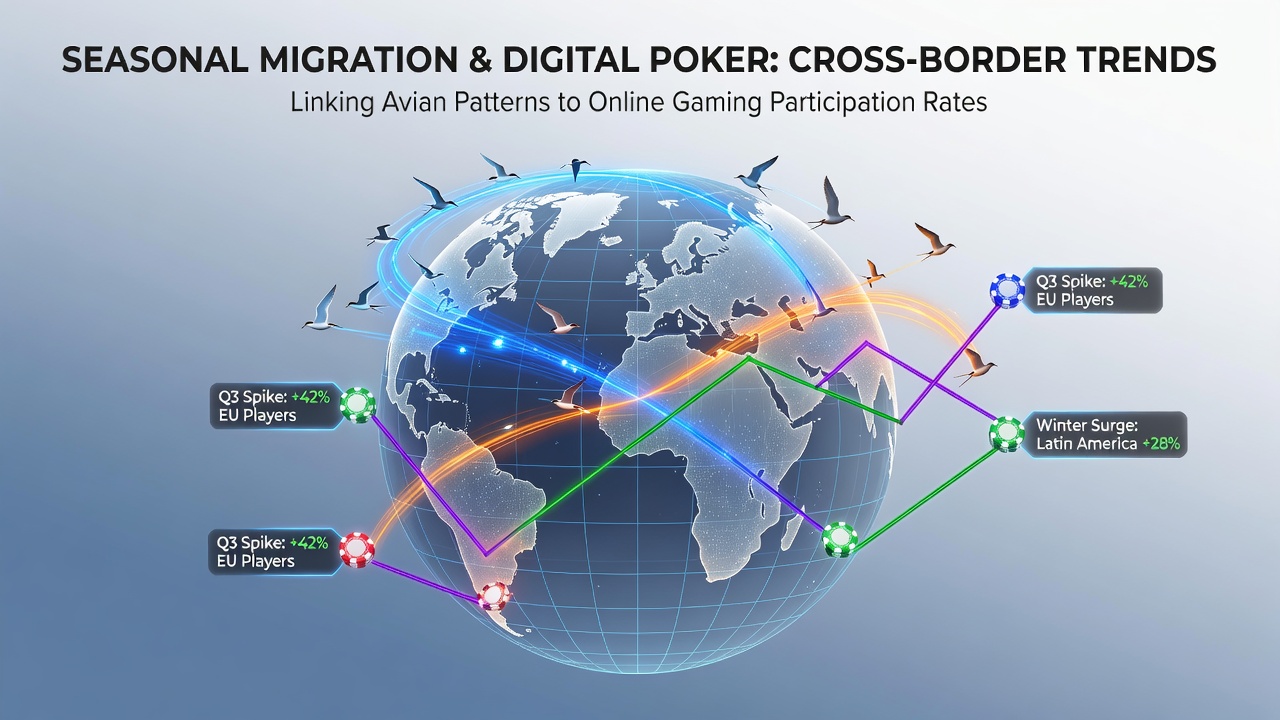
Seasonal migration patterns shape participation rates in digital poker variants as populations move across international borders for work, leisure, and climate reasons, and data from multiple jurisdictions shows measurable shifts in online engagement during peak travel periods. Researchers tracking user activity on licensed platforms have noted consistent upticks in regions that receive large influxes of temporary residents, while origin countries often experience corresponding dips as players relocate.
Mapping Migration Cycles and Platform Activity
Northern hemisphere summers draw millions from Canada and the northern United States into southern states and across the Atlantic to Europe, and figures from the European Gaming and Betting Association indicate that digital poker traffic from these migrant cohorts rises sharply between May and September. Meanwhile southern hemisphere winter months send Australians and New Zealanders northward, creating parallel spikes in Asia-Pacific poker rooms as travelers settle into new time zones. These movements follow established routes documented by national statistics agencies, and the resulting player distributions appear in aggregated server logs released by regulatory bodies in multiple countries.
Cross-Border Data Patterns in July 2026
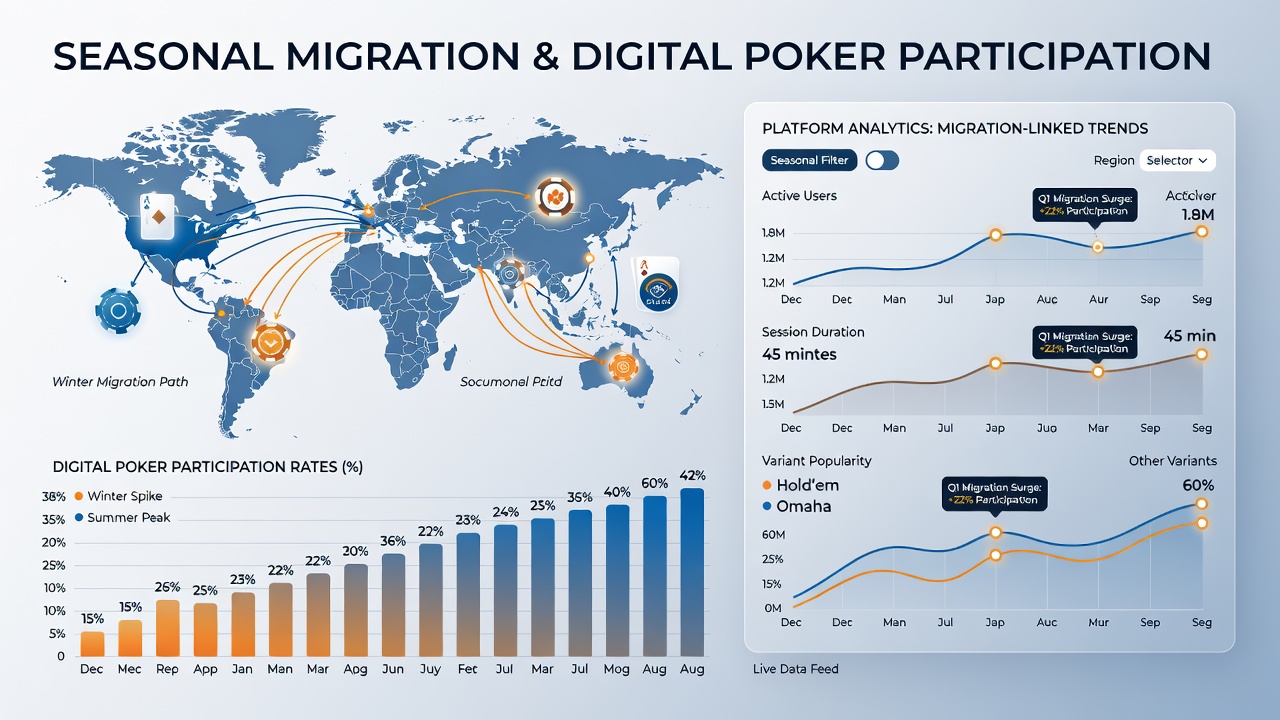
During July 2026, Australian Bureau of Statistics travel records showed a 22 percent increase in departures to Southeast Asia compared with the previous year, and simultaneous reports from Singapore and Malaysia gaming authorities recorded a 17 percent rise in new digital poker accounts registered from Australian IP addresses. At the same time, Canadian outbound tourism data revealed heavy flows into Mexico and Spain, where local operators reported elevated volumes in no-limit Texas hold'em and pot-limit Omaha variants during the same window. Observers note that these correlations emerge most clearly when platforms segment traffic by geo-location and match it against airline and visa statistics collected by governments.
Variant-Specific Shifts Across Regions
Fast-fold poker formats show stronger uptake among short-term business migrants who maintain irregular schedules, whereas traditional ring games attract longer-stay leisure travelers according to session-length metrics published by several multi-jurisdictional operators. European Union free-movement data from 2025-2026 highlights how intra-EU seasonal workers from Eastern member states increase activity on western-facing poker sites during harvest and tourism seasons, while return migrations in autumn coincide with renewed participation back home. These patterns hold after controlling for marketing campaigns and bonus promotions, suggesting the movement of people themselves drives much of the observed change.
Regulatory and Infrastructure Factors
Licensing frameworks in destination countries influence how quickly new arrivals can access regulated poker rooms, and authorities in Australia, Canada, and several EU states publish quarterly reports that allow researchers to align migration statistics with account creation and deposit volumes. Time-zone adjustments built into platform software also play a role, because players crossing multiple meridians often favor variants with shorter decision windows until they adapt. Network latency improvements along major air routes have further enabled consistent participation, and industry white papers document these infrastructure changes alongside player-behavior datasets.
Conclusion
Seasonal migration continues to reshape digital poker participation across borders as populations follow predictable annual cycles, and the alignment between travel data and platform metrics offers regulators and operators clearer pictures of demand fluctuations. Continued collection of anonymized geographic and temporal statistics will allow more precise modeling of these relationships in future seasons.