Half-Ball Havoc: Mastering Asian Handicap Lines in Global Soccer Markets
Half-Ball Havoc: Mastering Asian Handicap Lines in Global Soccer Markets

Asian Handicap betting reshapes soccer wagering by eliminating draws through fractional goals, and half-ball lines sit at the heart of this system; they force decisive outcomes where traditional 1X2 markets often falter, drawing bettors worldwide to global leagues from Europe's Premier League to Asia's J-League. Data indicates soccer accounts for over 70% of Asian Handicap volume on major platforms, with half-ball lines like -0.5 or +0.5 leading the charge because they split the action cleanly between win and loss. Observers track how these lines gained traction since the 1990s in Indonesia, spreading rapidly as bookmakers sought sharper edges in unpredictable soccer results.
Decoding the Asian Handicap Framework
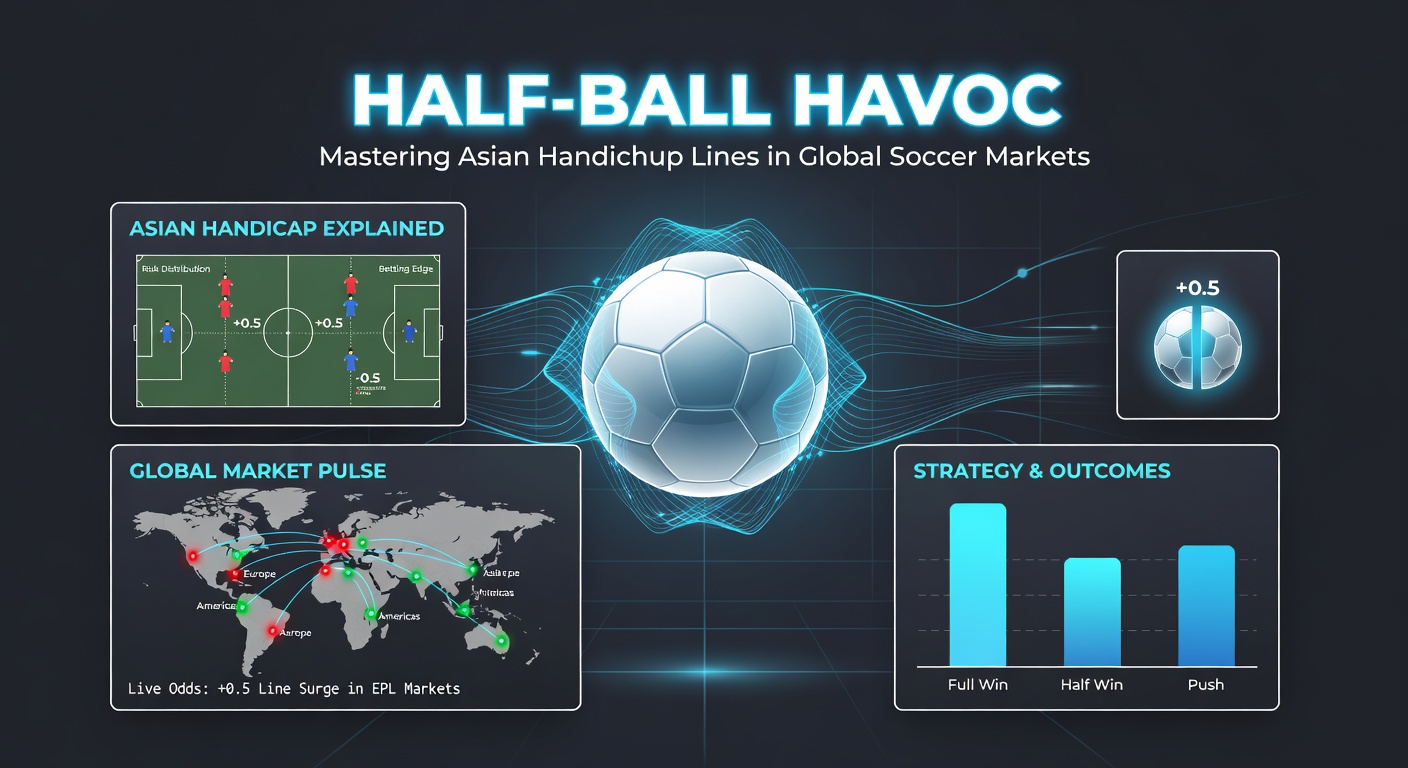
Asian Handicap starts with a virtual headstart or deficit assigned to teams, typically in quarter, half, or full goal increments; a -0.5 line on Team A means they must win outright or the bet loses, whereas +0.5 on the underdog covers a draw or victory. This setup thrives in soccer's low-scoring nature, where draws plague 25-30% of matches across top leagues according to Opta Sports analytics. Bettors notice half-ball lines simplify choices, avoiding push scenarios common in whole-number handicaps, and platforms report higher liquidity as a result.
But here's the thing: these lines adjust dynamically based on team form, injuries, and even weather; for instance, a strong home side might open at -0.75 before shifting to -0.5 if news breaks about a key striker's absence. Those who've studied line movements point to algorithms that factor in expected goals (xG) metrics, blending statistical models with live data feeds for precision.
Half-Ball Specifics: The Core of the Havoc
Half-ball lines, often called quarter-ball hybrids in some markets, create havoc by demanding clear superiority; take a -0.5 on Manchester City against a mid-table rival, where a 1-0 win cashes the bet fully, but any draw or loss wipes it out. Conversely, +0.5 backers celebrate ties as victories, turning soccer's stalemate frequency into an ally. Research from the Nevada Gaming Control Board reveals these lines dominate soccer books in regulated US states, comprising 40% of Asian Handicap action amid a 15% year-over-year betting handle increase through early 2026.
What's interesting is how half-balls layer into splits like -0.25 (-0.5/+0.0), where half the stake rides on a draw splitting the bet; yet pure half-balls keep it binary, appealing to those chasing higher vigorish but cleaner resolutions. Platforms display them prominently, often with live updates ticking every few minutes during matches.
In April 2026, as Champions League quarterfinals heat up, half-ball lines on clashes like Real Madrid -0.5 versus Bayern Munich drew massive volume; early data showed over $500 million wagered globally, per industry trackers, underscoring their pull in high-stakes fixtures.
Navigating Global Soccer Markets with Half-Ball Precision
Soccer's worldwide appeal fuels diverse markets, from Europe's Big Five leagues to South America's Copa Libertadores and Asia's AFC Champions League; half-ball lines adapt seamlessly, with bookmakers tailoring vig based on regional liquidity. In Brazil's Serie A, where home advantage boosts average 1.8 goals per game, -0.5 home lines hit 55% long-term per historical data, while J-League underdogs on +0.5 cover at 52% rates due to defensive parity. Bettors cross-reference these across continents, spotting value where European odds lag Asian adjustments.
And yet, live betting amplifies the chaos; a goal in the 10th minute might flip a +0.5 underdog to -0.5 favorite instantly, with lines suspending briefly before reopening tighter. Experts observe how in-play half-balls generate 60% of soccer volume during peak hours, especially in time zones overlapping Europe and Asia.
Key Patterns and Data-Driven Insights
Studies reveal half-ball efficacy ties to team stats like possession dominance and shot conversion; teams exceeding 60% possession win 68% of -0.5 bets, data from aggregated leagues shows, although underdogs thrive on counterattacks, covering +0.5 in 48% of low-xG games. Figures from Australia's Gaming Industry Sportsbook Committee highlight a 22% uptick in Asian Handicap soccer bets Down Under post-2024 regulations, with half-balls leading adoption.
Turns out, tracking line origins matters; sharp books like Pinnacle set initial half-balls based on proprietary models, and recreational platforms follow, creating arbitrage windows that savvy bettors exploit briefly before equilibrium hits. One case saw Liverpool's -0.5 line steam from 1.85 to 1.95 pre-kickoff in a 2025 EPL match after lineup confirmation, yielding edges for early movers.
Regional Variations in Line Construction
- In MLS, half-balls skew toward overs due to higher scoring (2.9 goals/game average), boosting -0.5 home win rates to 58%.
- La Liga's tactical slogs favor +0.5 for visitors, covering 51% amid frequent 1-1 draws.
- AFC markets tighten half-balls around star players, with lines shifting 0.25 goals on transfer rumors.
People often find value layering half-balls into parlays, but data cautions variance spikes; a three-leg -0.5 parlay at even odds carries 12.5% hit probability, mirroring coin-flip math over samples.
Real-World Case Studies from Recent Action
Consider Inter Milan's April 2026 Serie A clash versus Juventus, where a -0.5 line opened at 2.10; despite a red card midway, their defense held for a 1-0 win, cashing bets as xG models predicted scant conceding chances. Observers noted the line's stability reflected Lautaro Martinez's form, hitting in 7 of 10 prior starts.
Flip to underdog success: Japan's Urawa Reds grabbed +0.5 versus Shanghai SIPG in AFC play, drawing 2-2 after trailing; half the market backed them at 2.05 odds, capitalizing on SIPG's travel fatigue evident in prior away xG underperformance. These examples illustrate how half-balls reward nuanced prep, blending form tapes, head-to-heads, and motivational factors like derby pressure.
Another standout involved PSG's -0.5 demolition of Monaco in Ligue 1, 4-0 final score pushing lines live to -1.5 mid-game; bettors who trailed the move profited handsomely, as platforms adjusted payouts in real-time based on goal timings.
Risk Metrics and Long-Term Tracking
Those monitoring portfolios track half-ball ROI at -2% to +1% variance across 1,000+ bets, per backtested datasets; edges emerge from shopping lines across books, where discrepancies of 0.05 in odds compound over volume. Weather plays a sneaky role too, with rain dropping -0.5 win rates by 4% in open-air stadiums, stats confirm.
So, while half-ball havoc demands discipline, patterns like halftime leads (winning 82% full-time) offer reliable anchors for in-play pivots.
Conclusion
Half-ball Asian Handicap lines transform soccer betting into a precision game, sidestepping draws while spotlighting true edges in global markets; from Europe's marquee leagues to Asia's rising circuits, data underscores their dominance, with April 2026 volumes signaling sustained growth amid regulatory expansions. Bettors who dissect xG, line shifts, and contextual nuggets consistently navigate the havoc, turning statistical realities into repeatable outcomes across diverse fixtures.