Circadian Rhythms Influence Risk Assessment Accuracy in Prolonged Multi-Table Digital Card Play
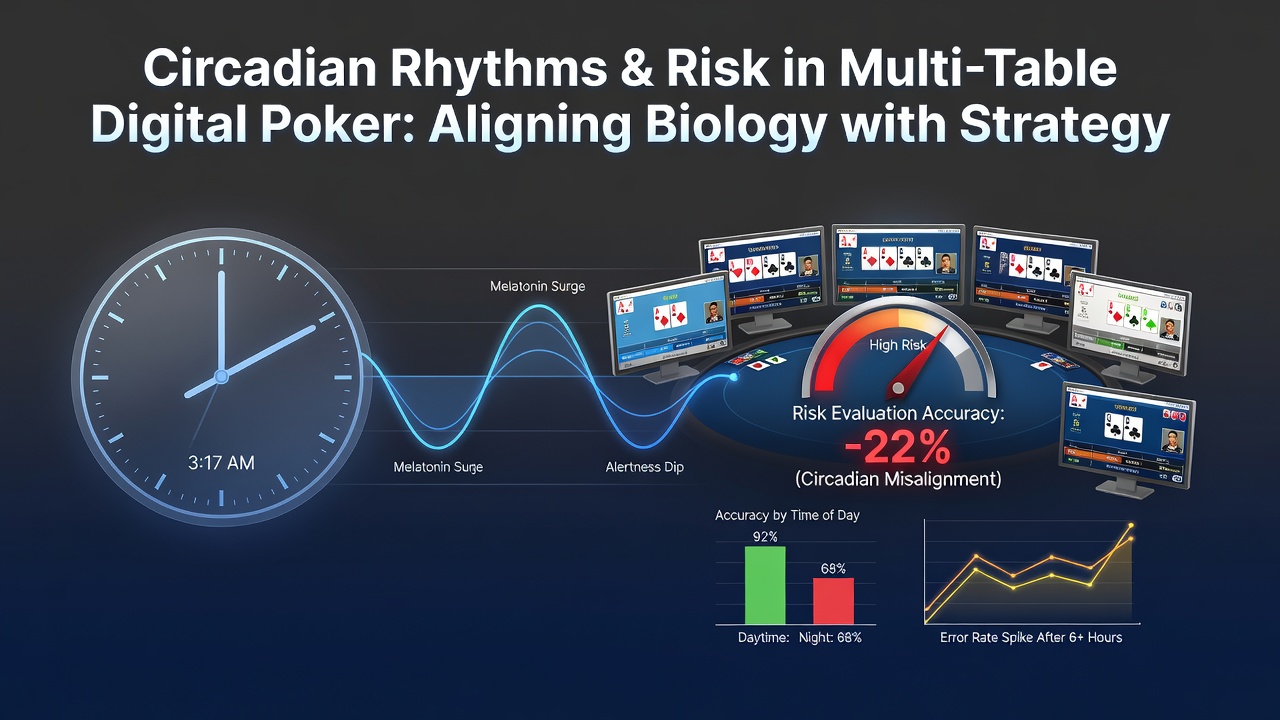
Researchers studying human biology have long documented how internal clocks regulate alertness, hormone levels, and cognitive sharpness across a 24-hour cycle, and these patterns extend directly into performance on multi-table digital card platforms where players evaluate risks over many hours. Data from sleep science shows peak cognitive function typically occurs in the late morning to early afternoon hours, while dips emerge in the early morning when core body temperature drops and melatonin rises. Players engaged in extended sessions often encounter these natural troughs, which correlate with slower processing of probabilities and reduced accuracy in spotting optimal betting decisions.
How Internal Clocks Shape Decision Patterns
Studies tracking participants during simulated extended gaming periods reveal that risk evaluation accuracy declines measurably after midnight for individuals whose typical sleep onset occurs before 1 a.m., because adenosine accumulation and reduced prefrontal cortex activity impair impulse control and probabilistic reasoning. Observers note that the same player who folds marginal hands correctly at 8 p.m. may call wider ranges or chase draws more aggressively by 3 a.m., even when facing identical stack depths and table dynamics. This shift occurs without conscious awareness in many cases, as the brain continues to operate on its established circadian schedule regardless of external lighting or caffeine intake.
Evidence from Performance Tracking Research
Longitudinal data collected from online platforms indicates that average fold frequency on strong but non-nut hands drops by measurable percentages during the 2 a.m. to 5 a.m. window compared with afternoon sessions, while raise frequency on speculative holdings increases. A 2025 analysis published by the National Institute of Neurological Disorders and Stroke examined how sleep pressure interacts with decision-making under uncertainty and found direct ties between hours since last rest and error rates in risk-reward calculations. Those findings align with observations from multi-table environments where participants logged decisions across different times of day.
Further research conducted through university laboratories in Australia has examined similar patterns among recreational and professional participants, showing that accuracy in identifying positive expected-value spots erodes steadily after the 18th consecutive hour awake. The study controlled for experience level yet still recorded consistent declines in selective attention and working memory capacity that directly affect hand reading and range construction.
Regional Patterns and Platform Data
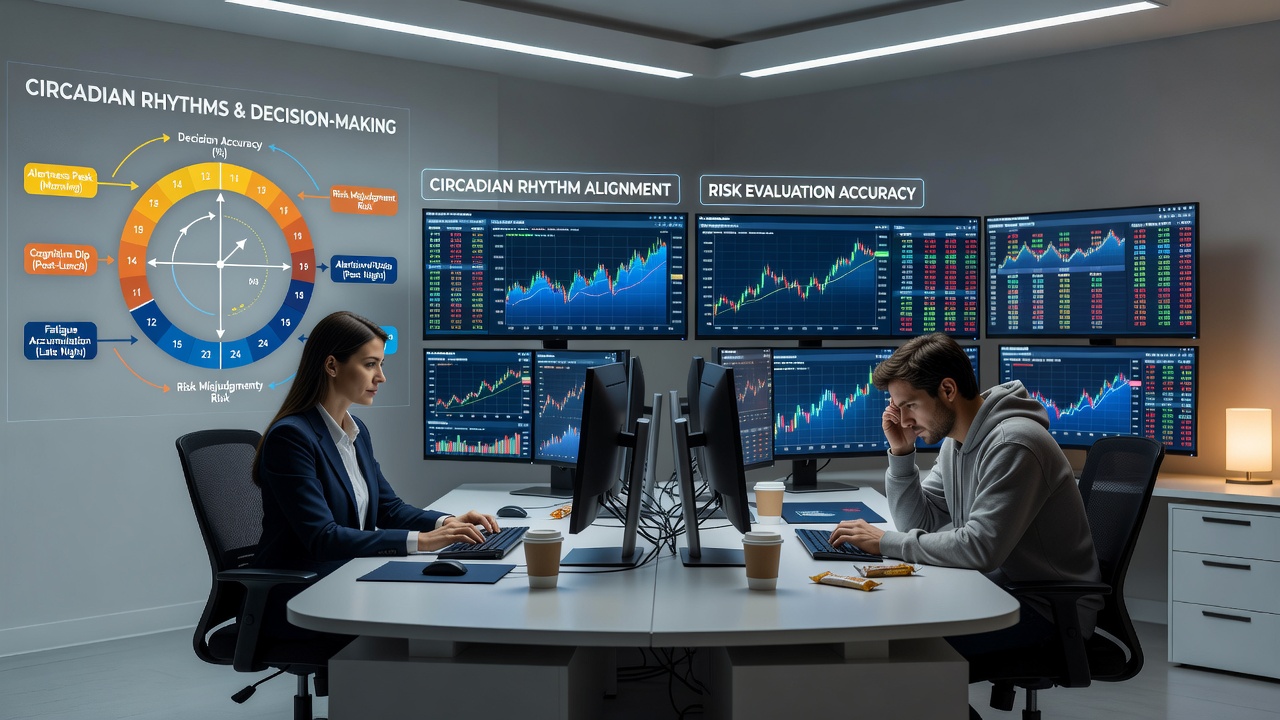
Platform analytics from major operators serving North American and European markets reveal higher volumes of large-pot confrontations during overnight hours, consistent with the hypothesis that risk tolerance rises when circadian alertness is lowest. Figures released by the Canadian Centre on Substance Use and Addiction in early 2026 documented parallel trends in decision quality among users reporting extended play windows, noting correlations between self-reported fatigue and larger variance in session outcomes. These patterns hold across different stake levels, suggesting the effect stems from biological timing rather than financial pressure alone.
Players who maintain consistent sleep schedules demonstrate smaller performance gaps between daytime and nighttime sessions, according to aggregated telemetry shared in industry reports. Those who shift their sleep phase gradually over several days can partially realign their peak alertness windows with typical playing hours, although complete adaptation remains limited by the rigid 24-hour cycle governed by the suprachiasmatic nucleus.
Physiological Markers and Monitoring Approaches
Wearable devices now track heart rate variability and skin temperature fluctuations that serve as proxies for circadian phase, allowing researchers to correlate these markers with in-game metrics such as bet sizing consistency and response latency. Preliminary results from European research consortia indicate that deviations from an individual's baseline circadian temperature minimum predict subsequent increases in suboptimal calls and reduced bluff frequency. Such tools provide objective data points beyond subjective feelings of tiredness that players often underestimate during extended sessions.
Light exposure timing also plays a documented role, with bright screen illumination during biological night further suppressing melatonin and fragmenting sleep architecture once sessions conclude. This compounds next-day deficits, creating a cycle where recovery becomes harder after repeated late sessions.
Conclusion
Current evidence establishes clear connections between circadian phase and the precision of risk evaluation during multi-hour sessions on digital card platforms. Data from neurological institutes, university laboratories, and platform telemetry consistently shows measurable declines in decision quality during periods of naturally reduced alertness. Players and researchers alike can reference these biological patterns when reviewing session logs or designing future studies, because the underlying mechanisms operate independently of skill level or game variant. Continued monitoring through physiological sensors and performance analytics will likely refine understanding of exactly how much individual variation exists around these population-level trends.