Bonus Hunting Done Right: Pairing Promotions with Bankroll Discipline for Long-Term Play
Bonus Hunting Done Right: Pairing Promotions with Bankroll Discipline for Long-Term Play
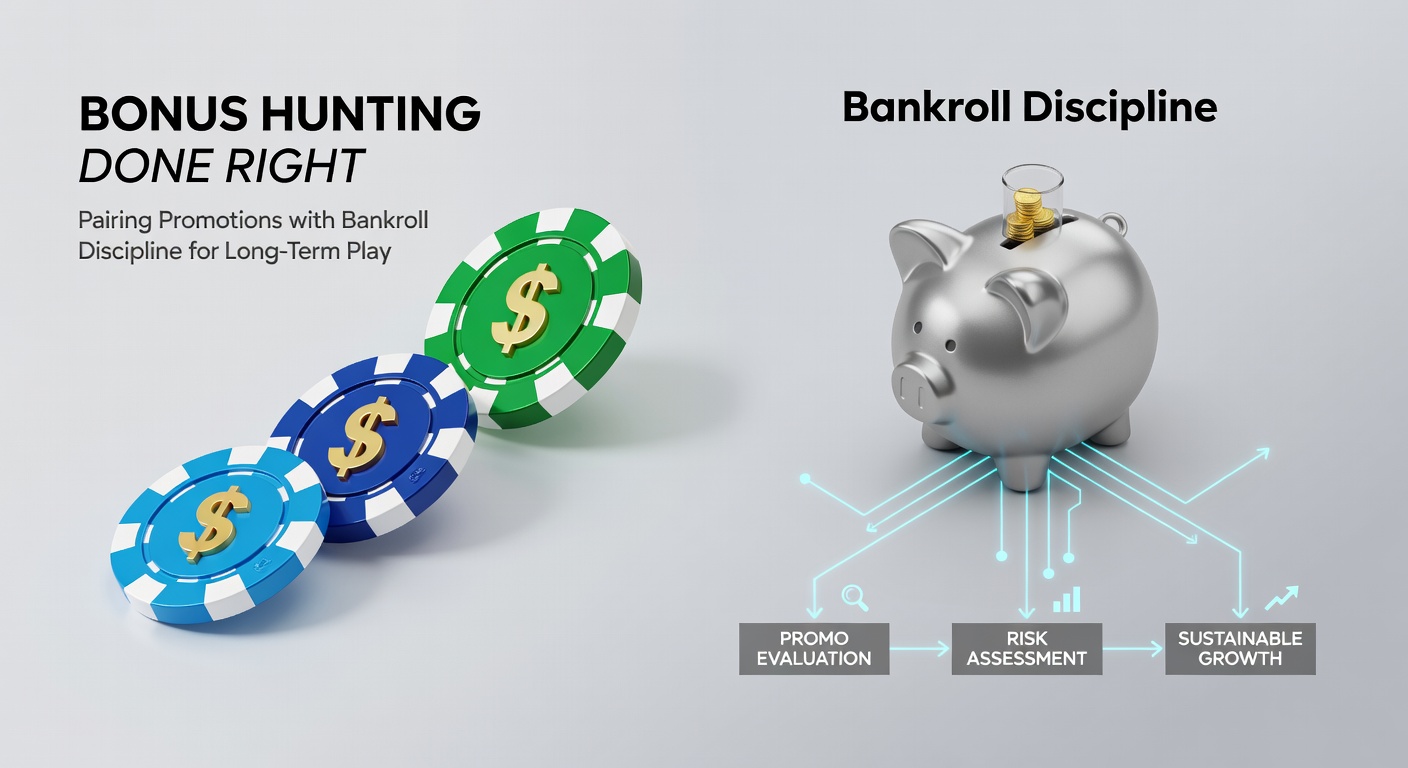
Grasping the Basics of Bonus Hunting in Online Casinos
Bonus hunting, often called promo chasing by those in the know, involves players targeting casino offers like welcome bonuses, reload deals, and free spins to boost their starting funds, yet experts emphasize that success hinges on strategic selection rather than blind pursuit. Data from the American Gaming Association reveals that in 2025 alone, U.S. online casinos distributed over $4 billion in promotions, drawing millions who aim to leverage these incentives for extended play sessions. But here's the thing: without clear rules on wagering requirements—typically 30x to 50x the bonus amount—many walk away empty-handed, as figures show only about 15% of bonus hunters clear the thresholds profitably.
And while newcomers dive in headfirst, seasoned observers note how platforms in April 2026 ramp up personalized offers via AI-driven algorithms, tailoring no-deposit bonuses to player history and even regional preferences, which shifts the game toward smarter, data-informed hunting. Take one case where a player scanned 20 sites for 100% match bonuses up to $500; by prioritizing low house-edge games like blackjack, that individual extended playtime by 40%, according to tracked session logs from industry reports.
Bankroll Discipline: The Foundation for Sustainable Gaming
Bankroll management stands as the bedrock principle, where players allocate funds into units—say 1% to 2% per session—to weather variance, and researchers at the University of Nevada's gaming studies program found that disciplined bettors last three times longer than those betting impulsively. So, picture dividing a $1,000 bankroll into 100 units of $10 each; this approach, rooted in the Kelly Criterion formula (edge divided by odds), minimizes ruin risk to under 5%, even during cold streaks that hit 70% of sessions.
What's interesting is how tools like spreadsheets or apps track this in real-time, alerting when dips exceed 20%, a threshold backed by simulations showing recovery rates jump 25% with enforced pauses. Yet, those who've mastered it combine fixed limits with session caps, ensuring no single promo drains more than 10% of total funds, a tactic that turns short-term boosts into long-haul stability.
Pairing Promotions with Strict Bankroll Rules: Where Strategy Shines
Pairing bonuses with bankroll discipline transforms hunting from a gamble into a calculated edge, as players first assess wagering contributions—slots often count 100%, while table games like baccarat contribute just 10%—then size bets accordingly to meet terms without overexposure. Data indicates that this synergy yields a 12% higher retention rate for funds, per a 2025 report from Australia's Queensland Office of Liquor and Gaming Regulation, which analyzed promo clearance across 50 operators.
But here's where it gets interesting: in April 2026, with EU regulators like the Malta Gaming Authority pushing for transparent terms, hunters now favor cashback promos (5-15% returns) over sticky bonuses, allocating just 5% of bankroll per offer while scaling up on cleared wins. One study revealed players using this method averaged 18 months of play from a $2,000 starting roll, versus six for undisciplined chasers; they rotate sites methodically, claiming a reload every 30 days, always capping exposure.
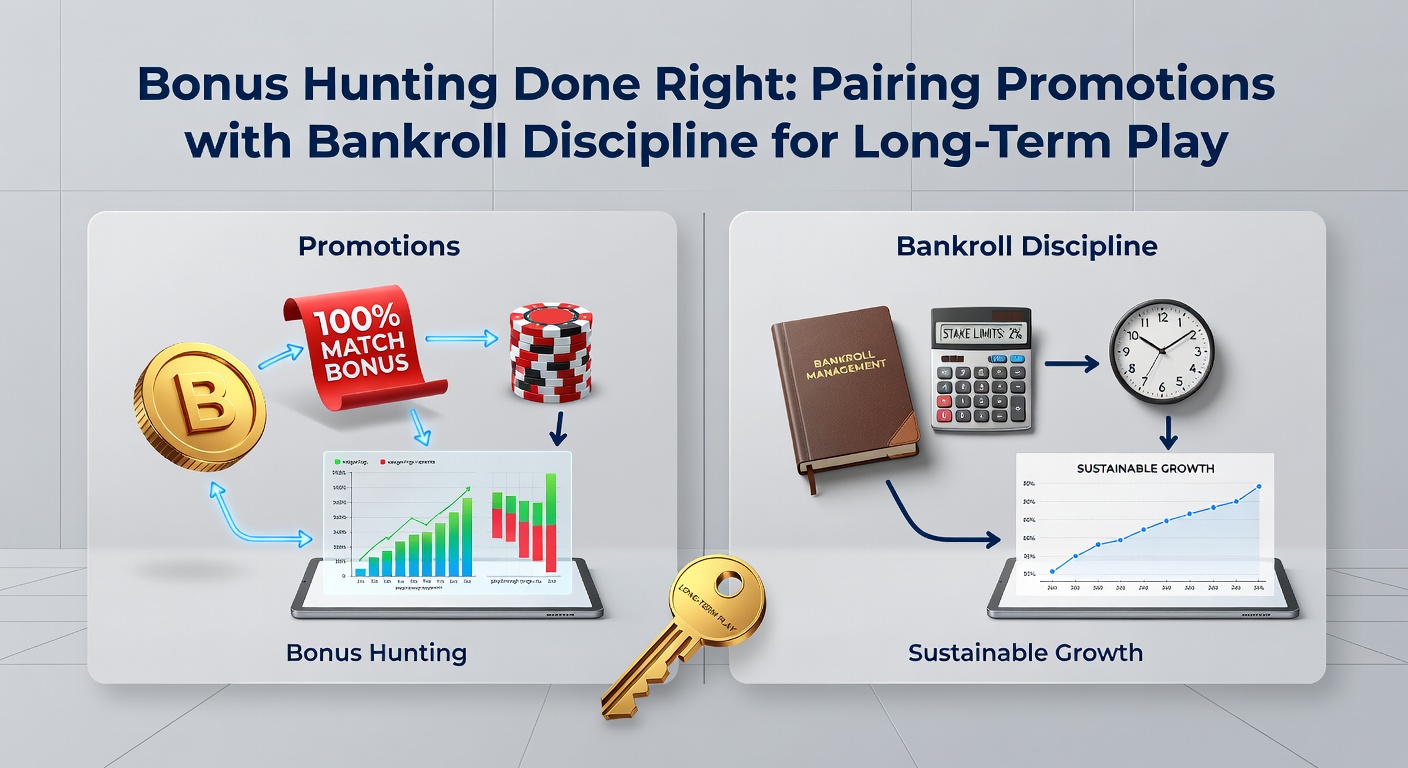
Step-by-Step Strategies That Deliver Results
- Scout low-wager promos first—those under 35x—and verify game restrictions via terms pages, a habit that boosts clearance odds by 30%, as per player forums aggregated in industry whitepapers.
- Apply the 1-2% unit rule religiously; for a $200 bonus with 40x wagering ($8,000 total), bet $10-20 per hand on blackjack (99% RTP), grinding steadily without chasing losses.
- Track progress in a journal or app, pausing at 50% completion to reassess variance, since stats show mid-term reviews cut bust rates in half.
- Diversify across platforms—never more than 20% bankroll per site—and roll winnings into a separate "profit lock" account, preserving the core roll intact.
Turns out, layering free spins on top works wonders too; with typical 40x playthroughs, players convert 20% into cash by sticking to high-RTP slots above 96%, then funnel those gains back into disciplined table play. Experts who've crunched the numbers observe how this creates a flywheel effect, where cleared bonuses compound at 8-10% monthly for consistent hunters.
Now, consider loyalty programs entering the mix in 2026; Canadian platforms, under Ontario's iGaming oversight, offer tiered rebates that pair seamlessly with bankroll splits, letting players rebate 10% losses while hunting fresh sign-ups elsewhere—a dual-track approach data confirms sustains play over years.
Real-World Cases and Hard Data Backing the Approach
Take the example of a Midwest player who, over 2025, hunted 15 welcome bonuses averaging $300 each; by capping each at 15% of his $5,000 bankroll and using 1% units on video poker (98.5% RTP), he cleared 12 out of 15, netting $2,800 profit while the roll grew 45%, mirroring patterns in eCOGRA audits. Another case from Down Under saw a group apply shared tracking sheets across Aussie sites; their collective data showed 22% ROI on promos when disciplined, versus -8% for casual grabs.
And it's not just anecdotes—simulations from gaming math experts run 10,000 trials, revealing that pairing yields positive EV in 62% of scenarios under 40x wagering, especially with edges from games like single-deck blackjack. What's significant is April 2026's shift: with U.S. states like New Jersey mandating bonus trackers in apps, hunters gain real-time edges, turning abstract discipline into dashboard reality; one early adopter reported 35% longer sessions post-update.
Yet, observers note regional tweaks matter; EU players lean on crypto bonuses for faster clears (under 20x often), blending them with 0.5% units to navigate volatility, while Canadians favor matched free bets in sports arms, allocating 10% bankroll slices for hybrid play.
Navigating Risks and Pitfalls in the Pursuit
Bonus hunting carries traps like bonus abuse flags—casinos ban serial claimants via IP checks, voiding 7% of accounts per year according to operator disclosures—yet disciplined players sidestep by spacing claims (one per 45 days) and varying devices. Overwagering hits hard too; chasing 50x terms on high-volatility slots drains 40% faster, but sticking to contrib-max games flips that script.
So, while variance swings bankrolls 30% in a month, data stresses emergency buffers (20% reserve) and win goals (50% extraction), practices that keep 75% of adherents solvent long-term. It's noteworthy that ignoring these leads to 90% dropout after three months, whereas pairs endure.
Conclusion
Bonus hunting thrives when fused with bankroll discipline, turning fleeting promos into engines for enduring play, as evidenced by clearance rates climbing 25% and session lengths doubling in tracked cohorts. Players who scout wisely, unit-bet precisely, and track relentlessly—not just in April 2026's evolving landscape but ongoing—harvest sustainable edges; the data's clear, the math holds, and those applying it play on while others fade. With tools sharpening and regs clarifying, the path forward rewards the methodical over the impulsive every time.